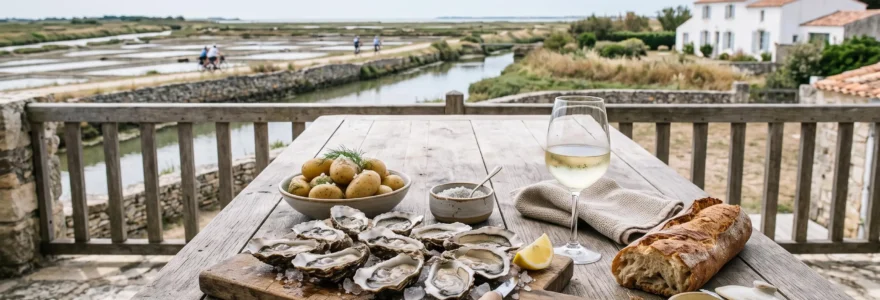
Looking for local food Île de Ré travellers genuinely rate for its island “terroir”? Start with three signatures you can taste almost anywhere on the island if you know what to look for: Île de Ré sea salt (including fleur de sel), early primeur potatoes, and oysters. The trick, especially on a short stay, is to match each product with the right place to buy or taste it (markets, salt marshes, oyster huts) and the right season.
Direct answer: Try Île de Ré’s IGP sea salt (including fleur de sel), its AOP early potatoes and locally produced oysters. Look for them at village markets, near the salt marshes and at oyster huts. Spring is the best time to seek out the island’s primeur potatoes.
If you only have 24–48 hours on Île de Ré, prioritise this
- Morning market: taste and buy salt, potatoes (in season) and sweet treats in one stop.
- Salt marsh stop: look for products labelled “Sel de l’Île de Ré” / “Fleur de sel de l’Île de Ré” (both have IGP status since 24 November 2023).
- Oyster hut: eat oysters simply (often with bread, butter and a glass of local wine), then cycle on.
- Season check: spring is the headline moment for the island’s early potatoes; oyster and salt availability can vary with producers and conditions.
What Makes Île de Ré a Destination for Food Lovers?
Île de Ré’s food identity is anchored in its insular landscape: salt marshes, market-garden fields, and an Atlantic shoreline where shellfish culture is part of everyday life. That “terroir” (a French term for the way place, climate and know-how shape taste) is not a marketing slogan here—it’s visible when you cycle past the marshes in the north or through vegetable plots near villages.
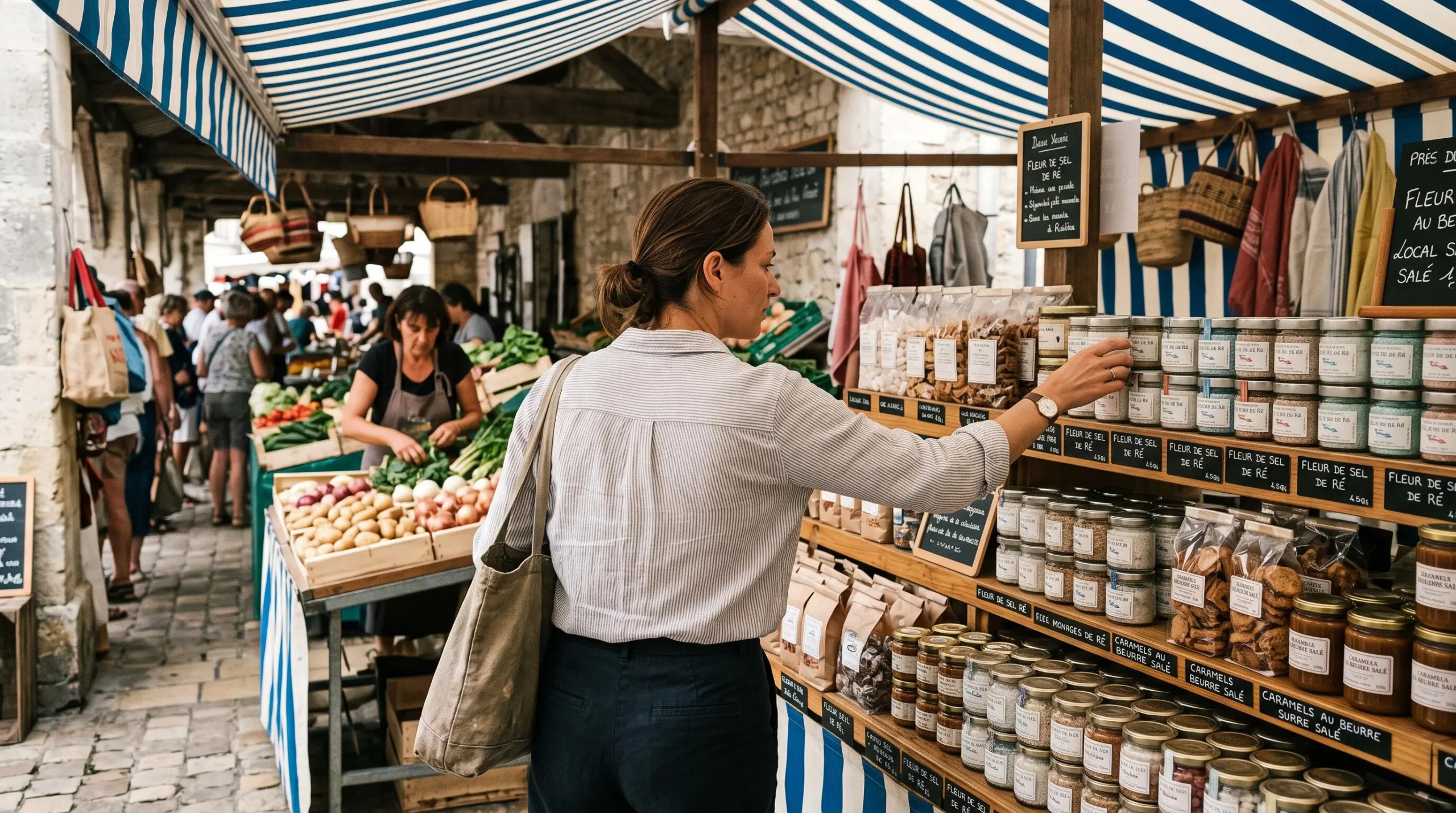
The easiest way to eat well without falling into touristy choices is to treat village markets as your compass. According to the official tourism office, markets run year-round and bring together local and seasonal produce—including the island’s PDO/AOP new potatoes, oysters and sea salt—so you can taste before you commit to a long sit-down meal.
If you want your food experiences to connect with local life, plan your visit around the village markets. Their stalls bring together seasonal produce, seafood and island specialities, making them a useful starting point for discovering what is available during your stay. Check the Île de Ré market guide to find the markets and their seasonal opening patterns.
How to spot “local” fast : Favour products clearly named after the island (Île de Ré) and ask one practical question at the stall: “Is this produced on the island or brought in?” A good seller will answer plainly.
Section takeaway for a short stay: Plan at least one morning market, then use the rest of the day for one salt-related stop (marsh/shop) and one sea stop (oysters).
The Signature Products: Salt, Potatoes and Oysters
To understand what to eat on Île de Ré, start with three of its best-known specialities: salt harvested from the marshes, early potatoes grown in the island’s fields and oysters raised along the Atlantic coast. Then look beyond this trio to discover other local flavours, including samphire from the marshes, mussels, island wines and sweet treats such as traditional biscuits or fleur de sel caramel. Each product offers a different way to explore the island’s food culture.
Sel de l’Île de Ré and fleur de sel: what’s the difference?
Sel de l’Île de Ré is the classic sea salt harvested in the island’s salt marshes, while fleur de sel (literally “flower of salt”) is the delicate crystals skimmed from the surface. In plain terms: grey/coarse salt is your everyday cooking salt; fleur de sel is usually used as a finishing touch, sprinkled at the end.
For authenticity, there’s a strong official marker: the French Ministry of Agriculture notes that since 24 November 2023, both “Sel de l’Île de Ré” and “Fleur de sel de l’Île de Ré” have EU-recognised IGP status (Protected Geographical Indication). It also provides a sense of scale for the marshes and production on the island (550 hectares; around 2,500 tonnes of salt and 200 tonnes of fleur de sel per year, on average).
Where to taste/buy & best moment: Look for salt at village markets year-round, and in shops near the marshes in the north of the island; production depends on conditions, so availability of specific harvests can vary by year.
Early “primeur” potatoes: the island product with AOP/PDO status
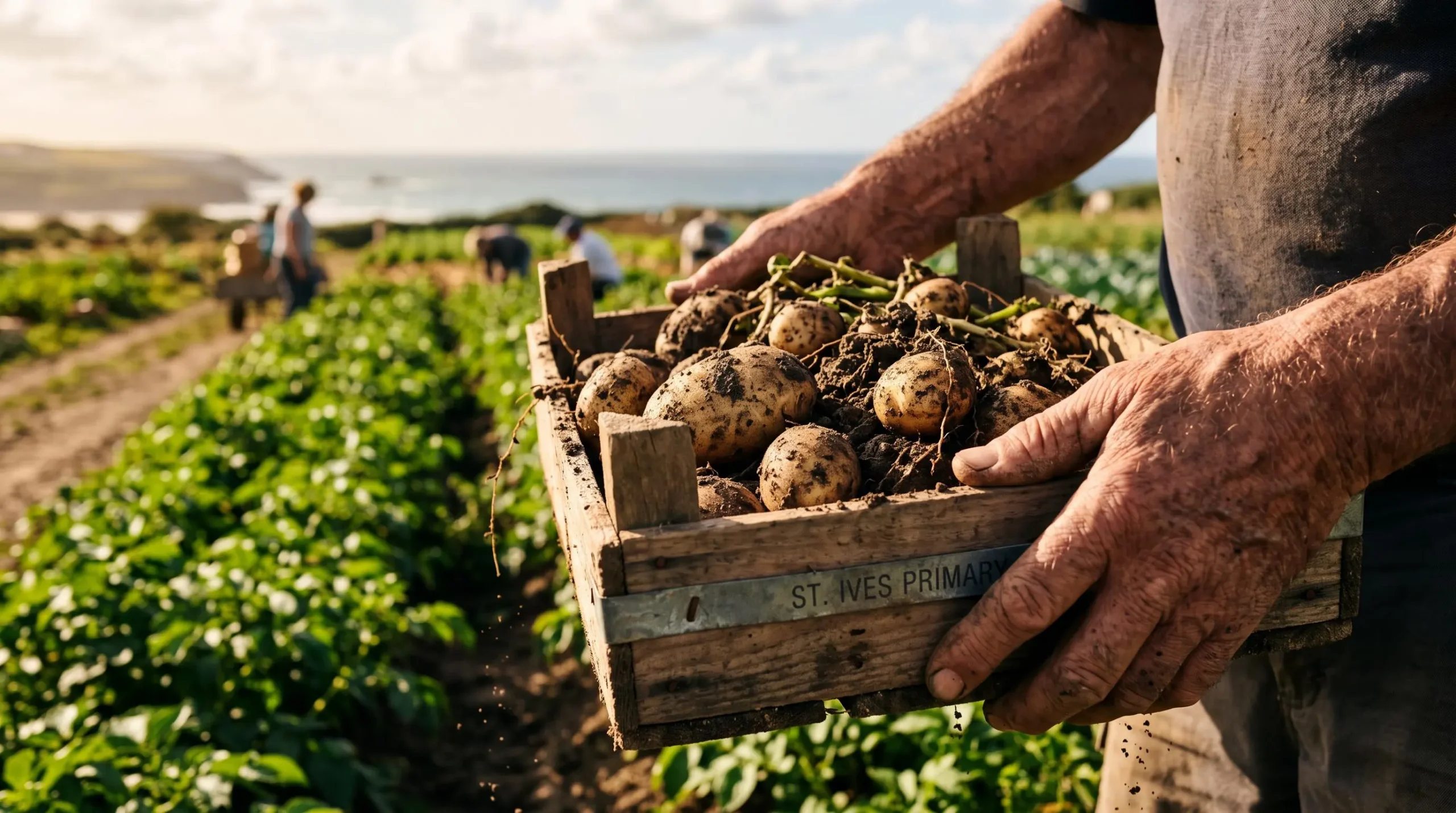
The island’s most distinctive “vegetable” is the Pomme de terre de l’Île de Ré, sold as a primeur potato—meaning it’s harvested before full maturity. That early harvest is part of what people come for in spring.
Unlike many market staples, this product has a clear official designation. The INAO, France’s national body for origin and quality labels, confirms that the Pomme de terre de l’Île de Ré has held AOP status (PDO in English) since 1998. All stages of production, from growing to grading and packaging, take place on the island under the designation’s specifications.
Where to taste/buy & best moment: Buy them at village markets when they appear in season (typically spring), or taste them simply boiled/steamed with butter and a pinch of fleur de sel at a bistro that highlights local produce.
Oysters: how to keep it local without overclaiming
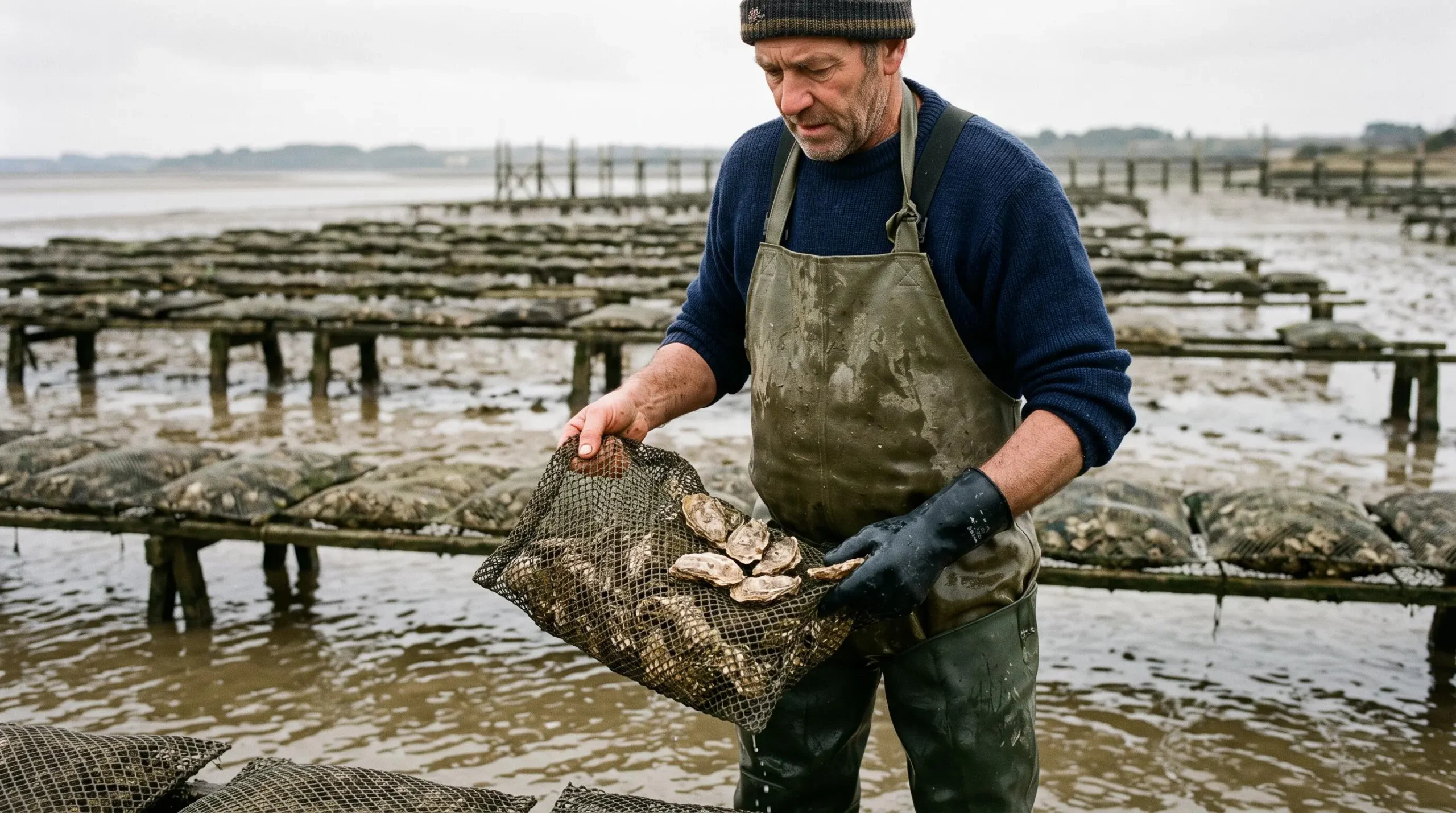
Oysters are a staple of the Atlantic coast, and they’re part of the Île de Ré experience—especially when you eat them at the water’s edge rather than in a generic brasserie. What matters for authenticity is less a label and more the place and format: direct sales and tasting at oyster huts (“cabanes”) along the coast, where the product doesn’t need much dressing up.
The official tourism office highlights oysters among the island foods you’ll commonly find at markets. Beyond that, specific farms and exact production areas change, so treat on-the-spot verification as part of the ritual: ask where the oysters were raised and whether the seller is the producer.
Where to taste/buy & best moment: Try oysters at an oyster hut or from a market stall selling shellfish; as with all shellfish, availability and quality can vary with season and conditions, so follow local advice on the day.
Section takeaway for a short stay: Use labels for salt (IGP) and potatoes (AOP/PDO) as your authenticity shortcuts; for oysters, prioritise direct-sale huts and ask one clear question about origin.
Where to Taste These Specialities on the Island?
If your time is limited, build your tasting plan around three stops that do most of the work: a morning market, a salt-marsh area, and an oyster hut. This keeps you close to producers and reduces the odds of paying for “local” food that’s actually generic.
A simple one-day tasting itinerary (hypothetical)
A one-day food itinerary
You arrive for a day trip and want to discover the island’s local flavours. Start at a morning market to pick up a small bag of AOP primeur potatoes, if they are in season, and a jar of IGP salt. Then cycle or drive towards the salt marshes for a short visit, checking whether a producer’s shop is open. Finish with a tasting of oysters at a coastal hut, where you can enjoy this local speciality close to its production area.
To avoid inauthentic addresses, look for menus that name products precisely (for example “Pomme de terre de l’Île de Ré AOP” rather than “local potatoes”), and don’t be shy about asking where a fish or oyster plate comes from. A good place will answer without turning it into a sales pitch.
Section takeaway for a short stay: Markets first, producers second, restaurants last—because the market gives you the clearest signal of what’s truly in season on the island that week.
Sweet Treats and Local Drinks to Complete Your Visit
Once you’ve covered salt, potatoes and oysters, you can round out the island’s food culture with sweet market finds and local drinks. This is where browsing pays off: small producers often sell in limited quantities, and what’s “typical” can be seasonal.
Brioche and market sweets: what to look for
For a sweeter taste of Île de Ré, look beyond brioche to some of the island’s better-known treats. Traditional Île de Ré biscuits, often called galettes, and fleur de sel caramel are among the specialities highlighted by the local tourism office. You may also come across honey produced on the island. Look for these products at village markets and in local food shops, and check their place of production if you want to take home something genuinely local.
Local wines and aperitif culture: enjoy it, but verify specifics
Wine is another part of Île de Ré’s food culture. The island’s vineyards produce local wines, including light, fruity whites and rosés, as well as products associated with the wider Charentes region, such as Pineau des Charentes and Cognac. If you want to taste wine made on the island, ask about the producer and check the bottle label to confirm its origin. Some local producers also offer tastings, providing an opportunity to discover the island’s winemaking traditions.
Section takeaway for a short stay: Do sweets and drinks as “market add-ons”: after you’ve secured salt/potatoes (if in season), grab one sweet item and one bottle only if the label clearly points to island production.
Planning Your Food-Focused Trip to Île de Ré
The most common mistake on a short visit is planning meals first and markets second. Flip that: markets give you seasonal truth, then you can decide whether to eat out or assemble a beach picnic with genuinely local products.
When is the best time to enjoy these local foods?
Early potatoes: prioritise spring, because the INAO defines the island’s AOP potatoes as primeur (harvested before full maturity). You’ll still find potatoes later, but the “primeur” character is the point.
Salt and fleur de sel: you can buy them year-round at markets and shops, while production itself depends on weather and marsh conditions. If you’re curious, ask sellers whether what you’re buying is from a recent harvest.
Oysters: availability is broad, but seasonality and conditions matter—so make your plan flexible and follow what oyster sellers recommend that week.
How do you plan tastings with limited time?
- Anchor your morning around one marketArrive early, taste first, then buy: it’s the quickest way to identify what’s truly from the island that week.
- Pick one “production landscape” stopEither salt marshes (for salt culture) or the coast (for oysters). On a short stay, doing both is great, but not always realistic.
- Keep one meal deliberately simpleOysters at a hut, or potatoes with butter and fleur de sel. The island’s signatures shine when you don’t overcomplicate them.
- If you’re visiting in spring :Make AOP primeur potatoes your top priority, then add IGP salt and an oyster stop if time allows.
- If you’re visiting outside spring :Prioritise IGP salt and oysters (market + hut), and treat potatoes as a bonus rather than the main target.
- If you have only a few hours :Do one good market and buy three things: salt, something sweet, and oysters (or a seafood plate) to eat straight away.
Which local foods are genuinely from Île de Ré?
The most verifiable “from the island” foods are the IGP-labelled “Sel de l’Île de Ré” and “Fleur de sel de l’Île de Ré” (recognised in 2023 by the French Ministry of Agriculture) and the AOP/PDO “Pomme de terre de l’Île de Ré” (recognised by the INAO since 1998). Oysters are widely sold as part of the island’s food culture, but you’ll get the clearest local link by buying from markets or direct-sale oyster huts and asking the producer where they were raised.
Where can you buy genuine local products like sel de Ré and early potatoes?
Start with village markets, which the official Île de Ré tourism office presents as a year-round way to find seasonal local produce. For salt, also look near salt marsh areas where producers and specialist shops are common; for early potatoes, focus on spring market stalls and check for “Pomme de terre de l’Île de Ré” AOP/PDO wording.
What local food can you try on Île de Ré outside the high season?
Outside peak summer, markets still operate and are often your best bet for an authentic, low-pressure tasting loop. IGP salt is easy to buy year-round, and oysters are commonly available through markets and oyster huts; early primeur potatoes are more dependent on spring timing, so treat them as seasonal.
If you want to discover the food culture of Île de Ré without overcomplicating your visit, keep your plan simple: spend a morning at a local market, buy IGP-labelled island salt, try primeur potatoes in spring and enjoy oysters at a coastal hut. Add a local sweet treat or a glass of island-produced wine to round out your tasting experience.